
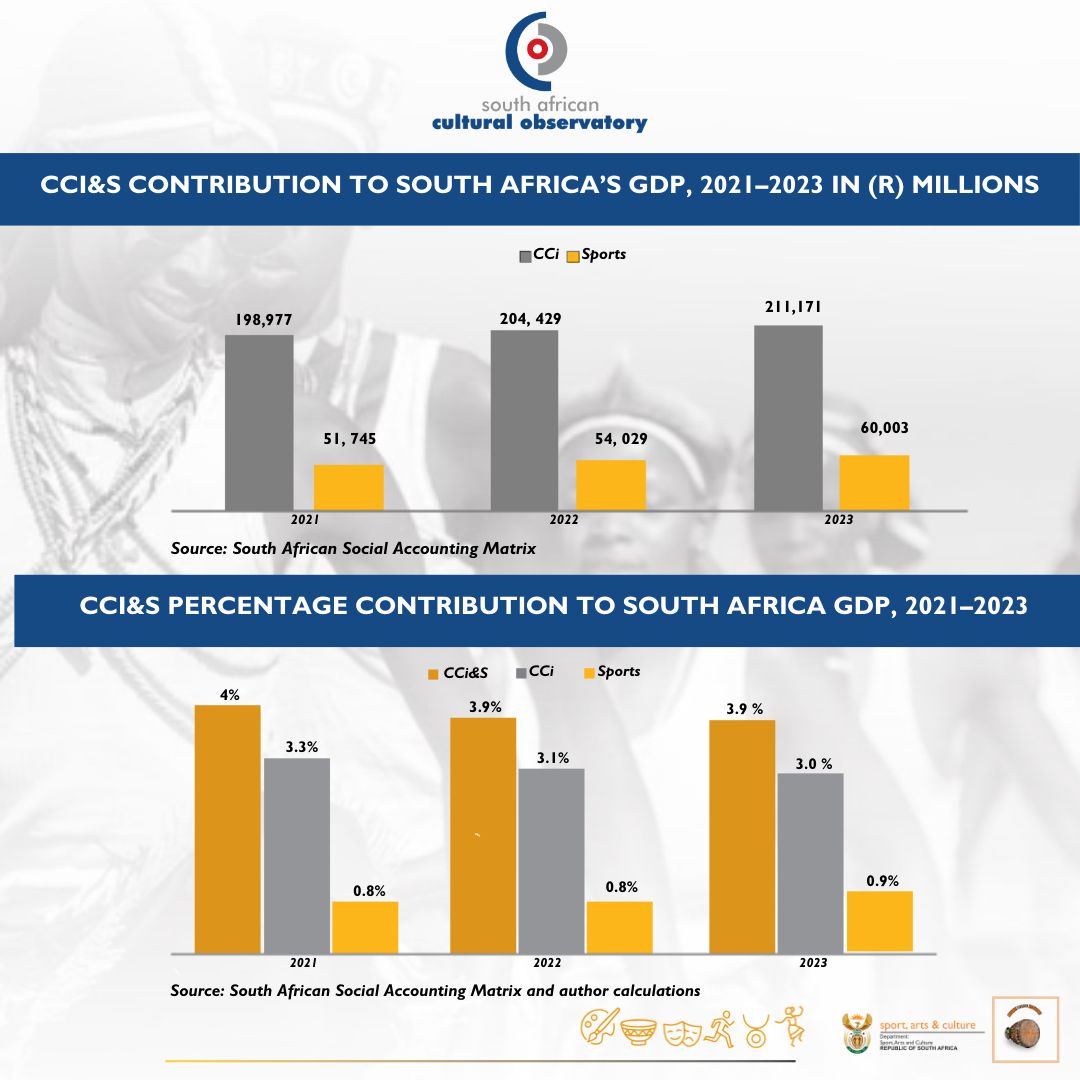
South Africa’s creative spirit is not just shaping identity and storytelling, it is driving real economic value. According to the latest Economic Mapping Study by the South African Cultural Observatory, the Cultural, Creative and Sports Industries (CCI&S) are proving to be one of the country’s most resilient and steadily growing sectors.
Between 2021 and 2023, the sector’s contribution to the national economy rose from nearly R250 billion to approximately R271 billion. That figure represents close to 4% of South Africa’s GDP placing the creative economy alongside some of the country’s more traditionally recognised industries. At a time when many sectors are still recovering from economic shocks, this growth signals something deeper: creativity is no longer on the margins of the economy; it is part of its engine.
At the heart of this growth are the Cultural and Creative Industries (CCI), which remain the largest contributors within the sector. This includes music, film, design, publishing, visual arts, and more industries that many artists and creatives operate in daily. Their consistent growth reflects both increasing demand and the expanding role of African storytelling in local and global markets.
Interestingly, the sports sector, while smaller in overall contribution, is growing at a faster pace. This suggests a shift in how audiences engage with entertainment and national identity, with sport becoming an increasingly powerful economic and cultural force.
One of the most important findings from the study is the sector’s multiplier effect. Nearly two-thirds of its total contribution comes from indirect and induced impacts. In simple terms, this means that when a creative project happens whether it’s a concert, film production, or festival, it doesn’t just benefit the artist. It creates opportunities for sound engineers, caterers, transport services, marketers, designers, and many others. The ripple effect spreads far beyond the stage or screen.
This growth is also being driven by increased digital access and rising consumer spending. As more South Africans come online and global platforms become more accessible, creatives are finding new ways to distribute their work, reach audiences, and generate income without relying solely on traditional gatekeepers.
But beyond the numbers, the significance of the CCI&S sector lies in its ability to sustain livelihoods, inspire innovation, and preserve cultural identity. In townships, rural areas, and urban centres alike, creatives are building businesses, creating jobs, and telling stories that shape how South Africa sees itself and how the world sees South Africa.
For emerging artists, this data is more than just statistics, it’s proof that there is space to build sustainable careers within the creative economy. The challenge now is ensuring that this growth translates into real opportunities on the ground: access to funding, skills development, infrastructure, and fair compensation.
As the industry continues to evolve, one thing is clear, South Africa’s future economy will not only be built in boardrooms and factories, but also in studios, stages, and creative spaces where culture and commerce meet.
For more insights, visit the South African Cultural Observatory’s official platform, link https://www.southafricanculturalobservatory.org.za/report/the-economic-mapping-of-the-cultural-creative-sports-industries-in-south-africa
Dealing with Epilepsy and leaning disability people teaching them skills development carpets knitting beading and jewellery .Students when reach 18yrs reject them from school. Principal invited me introduce to parents after attend classes Monday to Friday from 2006 until now without benefit. Need help.
Got it! I’ve noted that you’re the owner of Red Dawn Media in Umtata, Eastern Cape. If there’s anything else you’d like me to remember or help with, just say the word!