
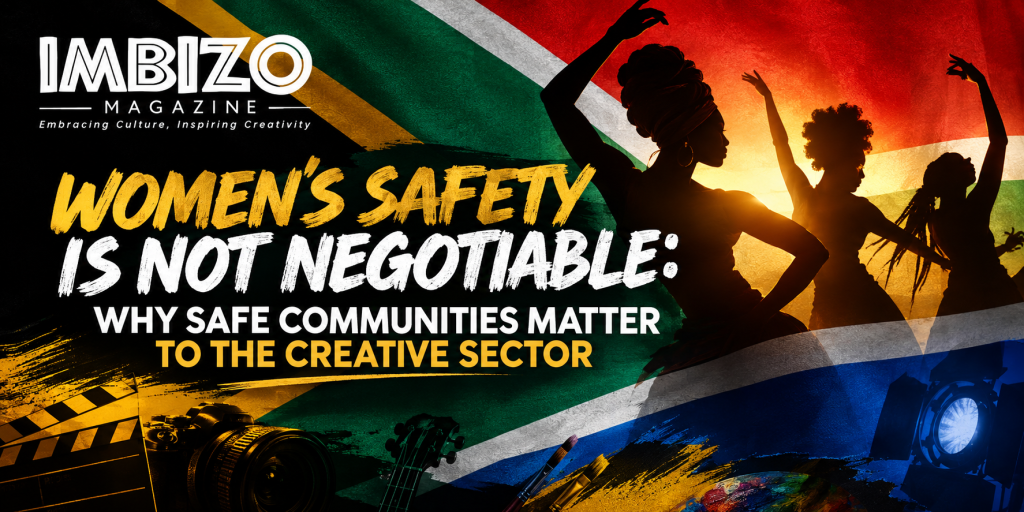
The discovery of several women’s bodies in and around Ekurhuleni has once again placed the safety of women and the wider crisis of Gender-Based Violence and Femicide (GBVF) firmly in the public conversation. For South Africa’s creative sector, however, the issue raises another important question: Can the creative economy truly thrive when women cannot move freely and safely through the communities where creative work takes place?
The Gauteng Provincial Legislature’s Multi-Party Women’s Caucus (MPWC) has expressed concern over the incidents and extended condolences to the families and loved ones of the victims. While investigations into the deaths are ongoing, the Caucus has called for stronger action to protect women, including increased police visibility in vulnerable areas, faster responses to missing-person cases and stronger community policing initiatives.
The MPWC has also emphasised that responsibility for violence lies with perpetrators, not victims, and called for greater cooperation between law enforcement, municipalities, civil society and communities.
For the creative sector, these concerns cannot be separated from everyday working realities.
Artists, performers, photographers, filmmakers, journalists, designers, cultural practitioners and event professionals often work outside conventional working hours. A female performer may leave a venue late at night after a show. A photographer may work in an unfamiliar public space. A musician may travel between rehearsals, performances and home. An emerging creative attending an event may have to rely on public transport or walk through poorly lit areas after the programme ends.
These realities make safe public spaces an important part of creating an environment in which women can participate fully in the creative economy.
The issue also extends to audiences. Concerts, theatre productions, festivals, exhibitions and community cultural programmes depend on people being able to attend and return home safely. If women feel unsafe travelling to a venue, waiting for transport or walking through surrounding areas, their participation in cultural life can be affected.
For a sector that frequently speaks about inclusion, opportunity and access, safety must form part of that conversation.
The MPWC’s call for stronger cooperation between authorities and communities also raises questions for the creative industries themselves. Event organisers, venues, municipalities, community organisations and creative practitioners all have a role to play in thinking about safety before, during and after cultural events.
This could include better lighting around venues, clearly communicated emergency procedures, safer transport arrangements, trained security personnel, designated reporting mechanisms and partnerships with local safety structures.
Importantly, such measures should not shift responsibility onto women to change how they dress, where they go or when they travel. The responsibility for violence remains with those who commit it, while institutions and communities have a responsibility to create environments where people can participate without fear.
Ekurhuleni has a significant network of artists, cultural practitioners, venues and community-based creative initiatives. The safety of women therefore affects not only individuals but also the broader cultural ecosystem.
As South Africa continues to invest in creative industries and speaks about creating opportunities for young people, the question of safe participation cannot be treated as separate from economic development.
Women are not only audiences within the creative sector. They are artists, producers, managers, photographers, journalists, technicians, entrepreneurs, organisers and cultural leaders.
Their ability to work, create, travel and participate safely is part of the health of the sector itself.
The MPWC’s statement therefore presents an opportunity for a broader conversation: What more can communities, creative organisations, venues and authorities do to ensure that women can participate in cultural and creative life without fear?
Until women can move through their communities, attend events, pursue opportunities and return home safely, the conversation about an inclusive and thriving creative economy remains incomplete.

Hi
I’ve been verbally assaulted, physically assaulted, sexually assaulted, mentally assaulted. And of all the mentioned assaults, I received justice in None! Leading finally to losing faith and trust in the South African justice system. Am I to blame? When in most occasions it is the people I trusted who committed the mentioned crimes? This includes; family, doctors, nurses, friends and worst of all police officers.
The excuses were often the same, “she’s unsound; she won’t remember.” “She is unsound; she doesn’t know what is happening.”
#MyLifeMatter #MentalDisorderIsAnOpinion 👄
Women’s safety is not privilege,it is fundamental human right .We need safer public spaces, reliable transport, proper security at creative events, and zero tolerance for harassment and abuse. Most importantly, we need accountability and communities where men and women work together to promote respect and protect one another. Safety must be everyone’s responsibility. We must build communities where every woman can live with dignity, freedom and security.