
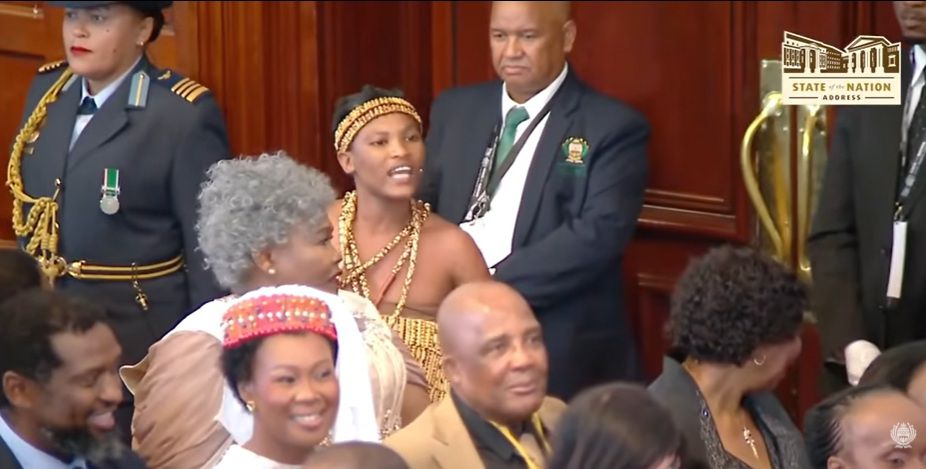
When poet Ria Reen stood before the nation at the 2026 State of the Nation Address (SONA) and delivered words of praise in her Khoi‑San language, it wasn’t just another moment in an official ceremony, it was a cultural milestone. Her performance highlighted centuries of history, silence, and revival, and it raises a powerful question: Can Khoi‑San languages ever become official languages of South Africa?
Under the 1996 Constitution of South Africa, there are 12 official languages from isiZulu to Afrikaans, Sepedi to siSwati but no Khoi‑San language currently holds official status. However, the Constitution also includes a meaningful provision: it requires the state to take “practical and positive measures” to elevate the status and advance the use of all indigenous languages. It further mandates that the Pan South African Language Board (PanSALB) promote and create conditions for the development and use of Khoi, Nama and San languages even if they are not yet official languages. This is important, because it means government recognises the heritage value of these languages, even if they don’t carry the full legal status of the 12 official tongues.
Are There Moves Toward Official Recognition?
Khoi‑San languages are being introduced into the school curriculum as additional subjects, a policy push aimed at mother‑tongue learning and cultural preservation. Khoi‑San communities and leaders continue to push for formal recognition of their languages and greater cultural status, including through marches and memoranda demanding official status and recognition as a First Nation. There is legal and political advocacy to extend language policy frameworks to provide stronger rights and resources for Khoi‑San and other indigenous languages, although these have not yet resulted in new official languages. In other words, there is momentum but official status on par with isiXhosa or isiZulu has not yet been realised.
For many advocates, official recognition isn’t just symbolic, it’s deeply tied to identity, dignity, and cultural justice. Khoi‑San languages are some of the oldest on the continent, with structures, rhythms and click consonants that have influenced many Southern African languages. Yet due to centuries of colonial oppression and assimilation, most of these languages narrowly survive today only in small communities and revitalisation efforts.
Official status would mean:
– Greater representation and validation for Khoi‑San cultural identity in national life.
– Government services and documentation must be available in those languages.
– Stronger protections and funding for language preservation.
Ria Reen’s performance at SONA is more than poetry, it’s a cultural statement. It shows that indigenous languages can move from community spaces into national consciousness, reminding South Africans that heritage isn’t only found in museums or history books, it’s alive.
For the arts and heritage sector, this moment is both celebratory and challenging:
– It highlights the importance of preserving endangered languages through arts, music, poetry, archives, and education.
It raises vital questions:
– Who decides what counts as “national culture”?
– How do we ensure minority voices are heard and preserved?
– Does performance on a national stage translate into lasting support for language and cultural survival?
Whether Khoi‑San languages will one day become official remains unanswered, but the conversation is now unavoidable. It engages South Africans with urgent questions about justice, identity, memory, and belonging. As the arts, heritage and education sectors continue to explore inclusion, it’s clear that what we celebrate on stage should influence what we value in law, in schools, and in public life.
After all, if poetry in ancient indigenous languages can captivate a national audience, surely those tongues deserve more than recognition in speeches, they deserve a place in the living heart of the nation.