
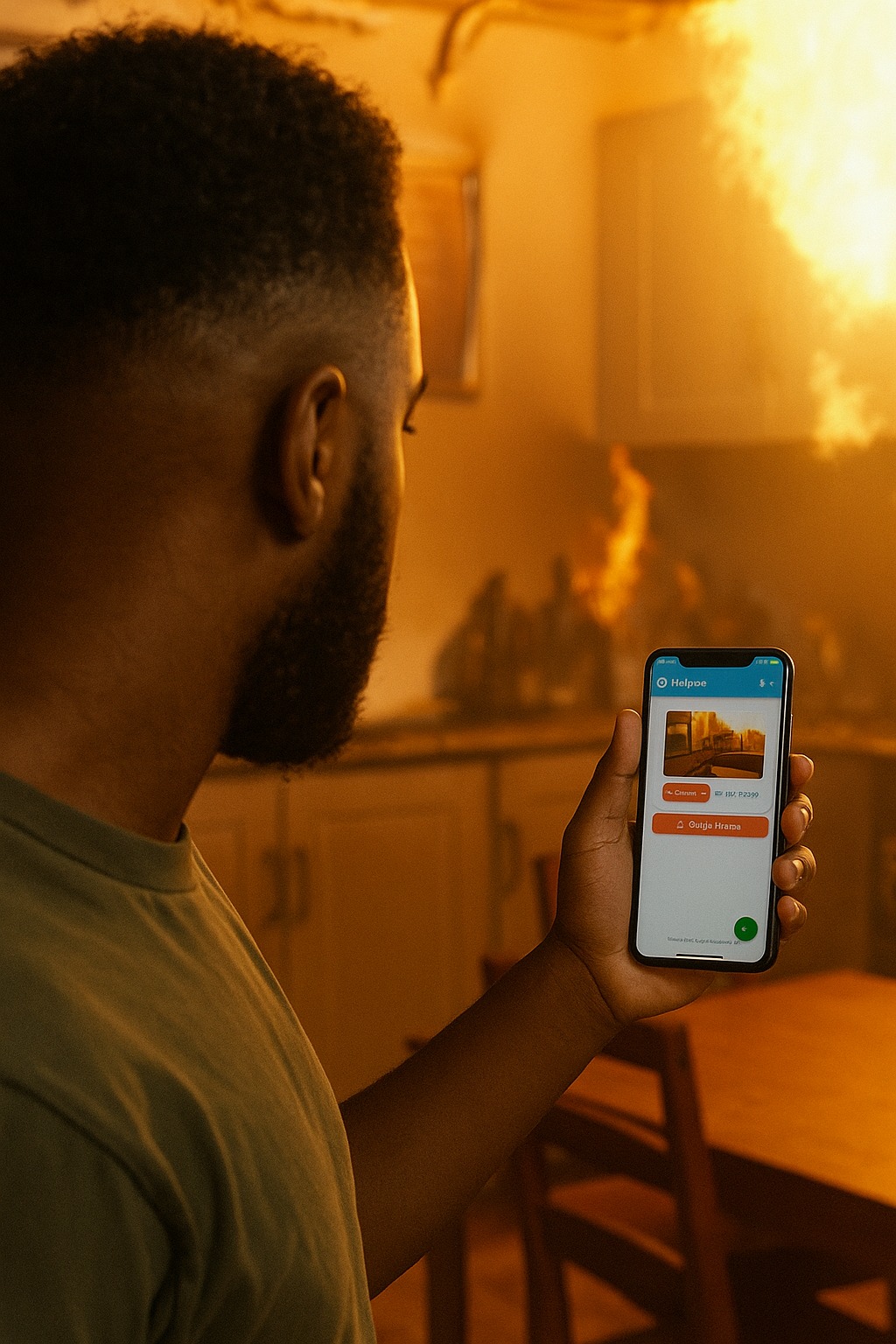
In a world where technology promises connection, millions remain unheard when it matters most, during an emergency. For South African innovator Lehlohonolo Pakeng, this gap was not theoretical. It was personal. It was human. And it became the foundation of HelpSee — an AI-powered emergency communication platform designed to ensure that no one is left behind when crisis strikes. HelpSee was born from a real encounter. Pakeng recalls meeting a Deaf man who was lost and trying to send his live location through WhatsApp. Despite having GPS technology, the person receiving the message could not understand his surroundings clearly enough to help him.
The experience exposed a painful truth: modern emergency systems still depend heavily on a person’s ability to speak, explain, and remain calm. That moment led Pakeng to ask a powerful question: What happens when someone cannot communicate at all, when they are injured, unconscious, or in shock? The answer became HelpSee. With a background in cybersecurity and secure systems engineering, Pakeng approached the problem from a systems perspective. In cybersecurity, clarity prevents breaches. In emergencies, clarity saves lives.
HelpSee uses artificial intelligence not to replace responders, but to strengthen the quality of information they receive. Instead of a vague “Help” message, the system structures alerts by verifying location, categorising the incident, and organising contextual data so responders can act quickly and effectively. “It organises distress,” Pakeng explains, transforming panic into structured, actionable intelligence.
Research conducted during HelpSee’s development revealed a disturbing reality: many hotels and managed properties had no reliable system to assist Deaf guests, elderly individuals, or people with medical conditions during emergencies. Some guests were told to send WhatsApp messages. Others were told to walk to reception. Some were turned away entirely.
These responses confirmed that the problem was not isolated, it was systemic. HelpSee was designed to fill that gap by creating digital safety infrastructure for hotels, residential estates, resorts, and managed communities.HelpSee is especially valuable for people who face communication barriers, including Deaf individuals, people with speech impairments, elderly travellers, tourists unfamiliar with local emergency systems, and anyone experiencing panic or trauma.
Emergency communication has historically favoured those who can speak clearly and remain calm. HelpSee changes that. “A Deaf person, an elderly tourist, someone in shock, they all receive the same quality of emergency communication,” Pakeng says. “That is not a feature. That is equity.” The platform also supports multiple South African languages and is designed to work even in low-bandwidth environments, ensuring accessibility across diverse communities. Currently founder-led and bootstrapped, HelpSee is entering pilot deployments within the hospitality sector.
These pilots will pave the way for broader expansion across residential communities and eventually across Africa. Pakeng’s long-term vision is ambitious but deeply rooted in purpose: to make structured emergency communication standard infrastructure, not optional innovation. He envisions a future where vulnerable individuals are never left without a voice. As part of the HelpSee ecosystem, Pakeng also launched Folks Share, a community-focused feature that allows users to signal concern or share observations before situations escalate into full emergencies. It bridges the gap between silence and crisis, empowering people to act early rather than hesitate. HelpSee represents more than technology. It represents empathy engineered into infrastructure.
It is a reminder that Africa’s tech innovators are not just building apps, they are building solutions to real human challenges. Pakeng offers simple advice to aspiring African innovators: “Build something real. Africa has real problems. Build real solutions.” In a country and continent filled with diverse voices, HelpSee stands as a powerful example of how technology can ensure that every voice, even those spoken in silence, can still be heard.