
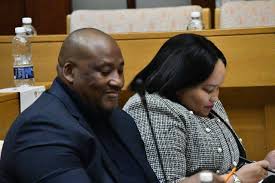
The Department of Sport, Arts, and Culture, under the leadership of Minister Gayton McKenzie and Deputy Minister Peace Mabe, unveiled an ambitious R6.3 billion budget for the 2025/26 financial year. The budget reflects a bold commitment to transform South Africa’s creative and sporting sectors through funding, access to markets, skills development, and social cohesion. Arts & Culture Promotion and Development – R1.725 Billion Investment in the Creative Economy. At the heart of the budget is the Department’s focus on Arts and Culture Promotion and Development, which receives a substantial R1.725 billion. This investment seeks to revitalize South Africa’s Cultural and Creative Industries (CCI) by unlocking access, transforming outdated structures, and creating jobs.
Deputy Minister Peace Mabe emphasized that arts and culture are central to heritage preservation and building a socially cohesive nation. To that end, the department is allocating:
– R32 million for Cultural and Creative Industries Development, focused on enabling access to both local and international markets.
– R350 million as part of a creative industries stimulus package, expected to generate 25,000 new job opportunities.
Under the Mzansi Golden Economy (MGE) strategy, 27 projects have been selected to facilitate market access and empowerment, creating 10,000 jobs in the sector. The adjudication for the MGE Open Call has been completed, and all 152 successful applicants have received their grant letters and now need to move quickly to submit their compliance documents. The total approved projects are valued at R109.4 million. This includes CCI Projects across domains and Touring Ventures. A list will be published in just three days’ time.
The Young Creatives Programme, a key part of the National Youth Service initiative, will continue into 2025/26 with the goal of placing 300 young people in creative spaces to enhance their employability and entrepreneurial skills. At the same time, efforts to unify and strengthen the creative and cultural industries (CCI) are gaining momentum through the establishment of 17 CCI Sector Cluster Organisations. These clusters aim to address persistent structural challenges in the sector, such as poor coordination, lack of unified representation, artist exploitation, uneven provincial development, and the ongoing disconnect between government and creatives.
In collaboration with Business and Arts South Africa (BASA), the Debut Fund Programme will support 50 emerging creatives in establishing their own enterprises within the creative sector. Minister McKenzie emphasized the role of cultural diplomacy and cross-border collaborations in unlocking new international markets for South African artists, thereby advancing both economic opportunity and the promotion of national identity. The recent enactment of the Copyright Amendment Bill marks a significant milestone, ushering in a new era of protection and equitable compensation for creatives by granting them exclusive rights over the use and distribution of their work. This long-anticipated legislation is a major achievement for musicians and content creators. Deputy Minister Mabe also confirmed continued dialogue with royalty collection agencies to ensure artists receive fair remuneration for their intellectual property. Collectively, these developments lay a strong foundation for fostering creativity, driving innovation, and securing sustainable careers in the arts.
The Department of Sport, Arts and Culture is investing R1.281 billion towards Recreation Development and Sport Promotion, with R98.5 million allocated specifically to strengthening national federations and enhancing administrative capacity. Minister Gayton McKenzie highlighted that over R627 million will go towards school sports, talent development, outdoor gyms, and play parks—initiatives designed to nurture future champions. The Department will also support the implementation of the VAR (Video Assistant Referee) system to professionalize match officiating, while strategic projects such as Project 350 will focus on grooming elite athletes for the 2028 Los Angeles Olympics and preparing for a potential South African Olympic bid in 2036.
A total of R2.787 billion will go toward Heritage Promotion and Preservation, with R1.6 billion earmarked for libraries and reading programmes across the country. The Department is also intensifying efforts to repatriate the remains of struggle heroes and ancestors from countries including Zimbabwe, Zambia, Angola, and Scotland.
Minister McKenzie’s address painted a picture of urgency and purpose: “In every township lives a Sipho with talent but no opportunity. This budget is about making sure that Sipho doesn’t fall through the cracks.” Through decisive financial support, legislative reform, and global vision, the Department is working to build a vibrant, inclusive, and economically viable creative and sporting landscape—one that reflects the soul of South Africa and positions it for international acclaim.
Join the Conversation: Are you satisfied with the budget and its implementation as a creative or athlete? Do you feel these initiatives speak to your needs and ambitions?
Let us know your thoughts. Your voice matters in shaping the future of arts, culture, and sport in South Africa